Automating the quote process: where mid-sized companies really lose time
In most SMEs, quotes are built from email, PDF and tribal knowledge. What an end-to-end quote process looks like, what can be automated – and what deliberately stays with people.
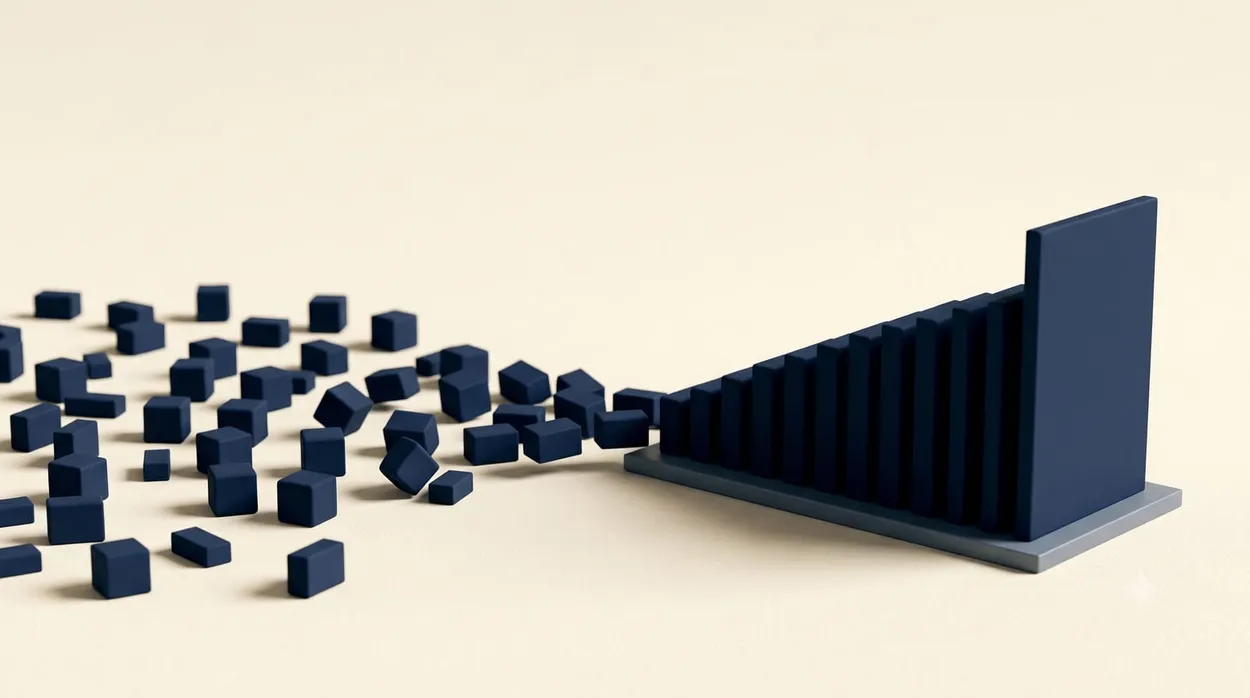
Ask a mid-sized company how a quote comes into being and you rarely hear a process described. You hear a story: the enquiry arrives by email, someone reads the attachment, someone remembers a similar case from a while back, someone types the draft in the evening. Days pass between arrival and dispatch – not because the quote is difficult, but because nobody owns it while it sits between inboxes.
The time is not lost in the writing
Actually writing a quote rarely takes long. The time is lost before that:
Understanding the enquiry. Unstructured emails, PDF attachments, missing details. Someone has to read, sort and follow up – and this is exactly where enquiries tend to stall.
Searching for reference cases. What did we calculate for similar requests? The knowledge exists, but it lives in old quotes, in folders, in heads.
Waiting for approval. The draft is ready, but the person who has to review it is on site, in a meeting, on holiday.
If you want to speed up your quote process, you do not need to write faster. You need to automate the hand-offs.
What can be automated
An end-to-end quote process reads the enquiry and its attachment automatically, extracts the requirements and makes visible which details are missing. It matches suitable reference cases from your own history. And it produces a draft that contains all the building blocks – as a proposal, not as a finished document.
Approval stays with a person. That is not a technical limitation but a deliberate decision: prices, judgement calls and the customer relationship belong in expert hands. The automation removes the legwork before that point, not the responsibility.
The Angebotslinie shows what this looks like in practice – a built, live-testable example of exactly this flow. And if you want to see the same process land inside an existing CRM/ERP system, you can walk through the Odoo demo (in German): from customer enquiry straight to lead and quote draft.
Where it fails in practice
Three mistakes come up again and again:
The process is automated before it is clarified. If nobody can say today who reviews an enquiry and who approves, software will not change that. First the flow, then the automation.
The tool dictates the process. Standard software forces companies into workflows that are not theirs. The better direction is the reverse: the existing flow stays, the automation fits in – into the systems that are already there.
The solution lives with the vendor. If the workflow runs on someone else’s infrastructure, you have created a new dependency. That is why I hand every solution over into the client’s own cloud instance, including all keys. The company owns its quote process – just as it owns its quotes.
The honest calculation
Whether the automation pays off is simple arithmetic: how many enquiries arrive per week, how long is the path to a quote, how many enquiries stall along the way? A company that loses two quotes a week because they arrive too late does not need to be convinced of efficiency.
If you want to walk through your own quote path soberly: describe your situation to me – a short conversation clarifies whether a closer look is worth it.
Related positions
What does this look like in your situation?Schedule a conversation
All Positions